Information
Populate the side area with widgets, images, and more. Easily add social icons linking to your social media pages and make sure that they are always just one click away.



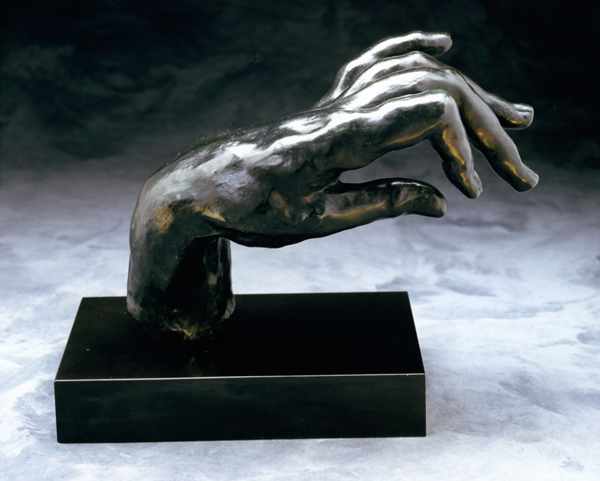
Dedicated to the memory of B. Gerald Cantor (1916-1996), The Hands of Rodin explored the artist’s fascination with the expressive capabilities of hands, both as independent sculptures and as parts of more complete pieces. The exhibition featured about fifty works and demonstrated Rodin’s mastery at portraying human hands and communicating their strength and expressive potential.
When Rodin composed a new figure he often experimented by attaching to it previously-made hands, exploring the possibilities the combinations might reveal. This working method encouraged Rodin’s interest in the fragment, and he championed the idea that individual forms, such as the hand, were not necessarily dependent upon a whole figure to convey meaning. By carefully modeling their musculature, proportion, texture and balance, Rodin showed that hands could convey a profound amount of emotion, from anger and despair to compassion and tenderness.
Under the tutelage of Musee Rodin curator Cecile Goldscheider, B. Gerald Cantor came to share Rodin’s fascination with the human hand. The very first Rodin Mr. Cantor purchased was The Hand of God, a highly symbolic work in which the hand represents God the Creator of man and woman, as well as artist as creator. His collection eventually included dozens of Rodin’s hands, and he continued to add them to his collection throughout his lifetime.
This exhibition, curated by then-Executive Director Rachel Blackburn, visited six sites:
Los Angeles County Museum of Art
Los Angeles, California
December 12, 1996 – March 2, 1997
Philadelphia Museum of Art
Philadelphia, Pennsylvania
March 27 – June 22, 1997
Brooklyn Museum of Art
Brooklyn, New York
July 18 – September 28, 1997
Museum of Art
Brigham Young University
Provo, Utah
October 24, 1997 – January 24, 1998
Arkansas Art Center
Little Rock, Arkansas
February 13 – May 17, 1998
Portland Art Museum
Portland, Oregon
June 1, 1998 – August 31, 1998